In this article
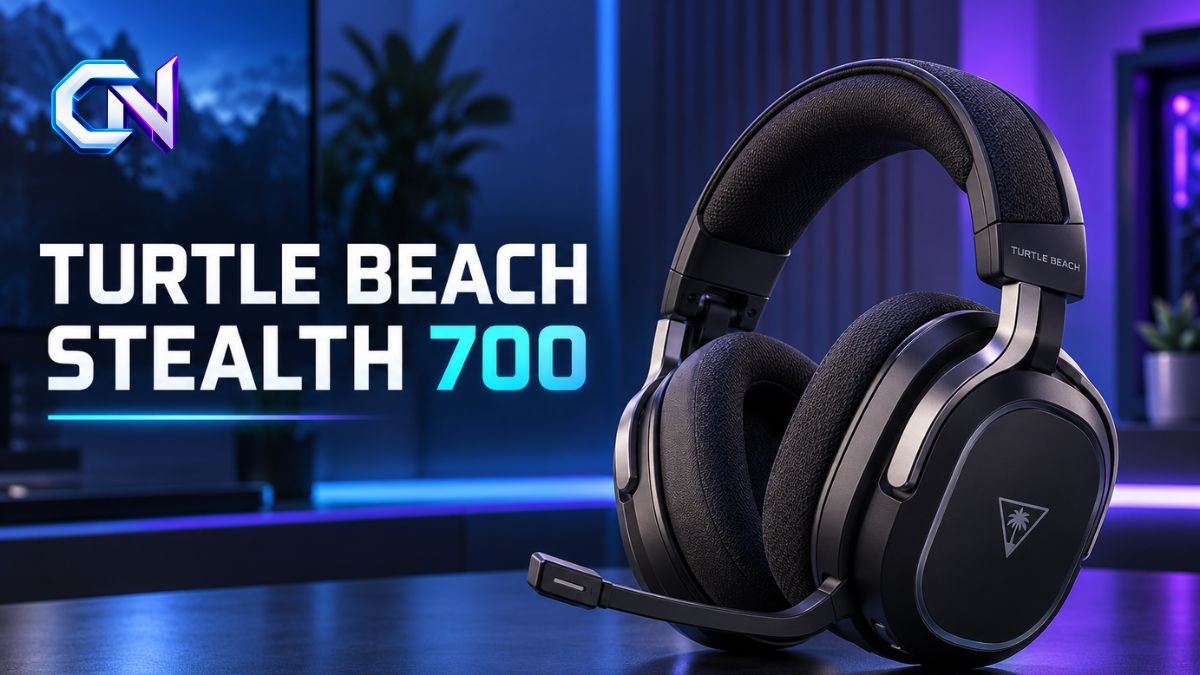
The Turtle Beach Stealth 700 is a wireless gaming headset range, with the Gen 3 model offering two USB transmitters, simultaneous Bluetooth connectivity and a manufacturer-rated battery life of up to 80 hours. It comes in Xbox, PlayStation and PC editions, but those versions do not support exactly the same platforms. The Xbox edition supports Xbox consoles, PlayStation and Windows PCs, while the PlayStation and PC editions leave Xbox out.
Choosing the right version therefore matters as much as comparing specifications. Generation names also deserve attention: a Gen 2 MAX listing describes different hardware from Gen 3, even though both carry the same familiar product name.
Turtle Beach Stealth 700 Gen 3: Which Version Do You Need?
The three Gen 3 editions share several headline features, including CrossPlay switching, Bluetooth and 60mm Eclipse Dual Drivers. However, platform support provides the clearest starting point when choosing between them.
| Gen 3 edition | Supported consoles | Computer support | Mobile connection |
|---|---|---|---|
| Xbox | Xbox Series X|S, Xbox One, PS5 and PS4 | Windows PC | Bluetooth |
| PlayStation | PS5 and PS4 | Windows PC | Bluetooth |
| PC | PS5 and PS4 | Windows PC | Bluetooth |
Turtle Beach’s official Xbox edition specifications explicitly include both Xbox and PlayStation consoles. Consequently, the Xbox label does not mean that edition works exclusively with Microsoft hardware. Its package includes one transmitter for Xbox and another for USB use with a compatible PC or PlayStation.
For buyers who use Xbox alongside another supported system, that compatibility is a decisive distinction. Meanwhile, the dedicated PC edition offers additional audio features discussed below. A shared product name does not make the three editions interchangeable.
How CrossPlay and Bluetooth Work
CrossPlay uses two USB wireless transmitters. You can leave them connected to two supported gaming devices and press a button on the headset to switch between those connections. This removes the need to move a single transmitter whenever you change systems.
There is a useful distinction between switching and mixing. CrossPlay switches the active USB wireless source. Separately, simultaneous Bluetooth allows you to hear a connected phone or tablet alongside the active console or PC connection. The two transmitters should therefore not be confused with a promise to mix two consoles at once.
The headset supports 2.4GHz wireless and Bluetooth 5.2 together, with independent volume controls for those audio sources. Turtle Beach specifically describes listening to phone music or using Discord on a mobile device while continuing to hear game audio. This is particularly relevant when comparing headsets whose Bluetooth connection requires leaving the gaming connection behind.
Drivers and the Dedicated PC Edition
Gen 3 uses 60mm Eclipse Dual Drivers. Turtle Beach describes a design with separate woofer and tweeter elements for low and high frequencies. Those terms refer to the components handling different parts of the sound, rather than separate wireless connections.
The dedicated PC edition adds 24-bit, 96kHz wireless audio on PC and Waves 3D Audio processing. It also specifies a microphone operating at 16-bit depth with a 32kHz sampling rate. These are concrete differences between editions, rather than changes limited to branding or packaging.
According to the official PC edition feature list, Waves 3D Audio includes Game, Movie and Music presets. The PC model also supports PlayStation, although Turtle Beach identifies its 24-bit, 96kHz wireless audio capability as PC-specific. Buyers should not assume that every advertised PC feature carries over to console use.
Microphone and Audio Controls
The console editions feature a flip-to-mute microphone with AI-based noise reduction. Raising the microphone mutes it, while the noise-reduction system targets unwanted background sound in the microphone signal.
That microphone feature concerns what other people hear from you. It should not be read as a claim that the headset provides active noise cancellation for the sound reaching your ears.
Gen 3 also supports variable microphone monitoring, sometimes called sidetone. This lets you hear your own voice through the headset and adjust its monitoring level. Alongside that, a remappable wheel and mode button provide configurable controls, although available functions depend on the edition. Checking the relevant model’s controls is more useful than assuming every version offers identical game-and-chat adjustments.
Battery Life and Charging
Turtle Beach rates Gen 3 for up to 80 hours of battery life. The wording matters: this is a manufacturer specification, not a guarantee that every combination of settings and use will produce exactly 80 hours.
Quick charging is another practical feature. Turtle Beach’s wireless headphone charging guide states that a 15-minute charge provides three hours of use for Gen 3. The headset includes a USB-A-to-USB-C charging cable.
For routine charging, the company advises connecting the USB-C end to the headset and the USB-A end to a suitable power source, such as a console or PC USB port. Its guide also identifies Swarm II as a way to check the battery percentage. These details are more useful for day-to-day ownership than treating the maximum runtime as a fixed charging schedule.
Comfort, Construction and Swarm II
The physical design combines memory-foam ear cushions with leatherette and woven fabric. Turtle Beach also includes its ProSpecs glasses-relief design, a steel-reinforced headband and metal yokes connecting the earcups to the headband. These describe the materials and construction; they do not establish that every wearer will find the fit equally comfortable.
Swarm II supplies the software controls on PC, iOS and Android. Its features include a 10-band equalizer, up to five custom presets, microphone adjustments and button mapping. An equalizer lets you change the balance of different frequency ranges, including bass and treble.
The app also supports firmware updates. Turtle Beach notes that some advanced audio features may not work in Bluetooth mode, so the connection method can affect which settings are available.
How Gen 3 Differs From Gen 2 MAX
When comparing Turtle Beach Stealth 700 listings, check the generation before comparing prices. The Gen 2 MAX uses 50mm Nanoclear drivers, while Gen 3 uses the 60mm Eclipse design. The older model also features cooling-gel-infused memory-foam cushions and Audio Hub software, rather than Gen 3’s Swarm II platform.
CrossPlay is another clear distinction. The Gen 2 MAX package lists one wireless USB transmitter; Gen 3 includes two. For someone regularly moving between compatible systems, that changes how the headset fits into an existing setup.
These differences also matter after purchase. Software instructions for Gen 2 MAX should not automatically be applied to Gen 3. Identify the full model name before downloading an app, following setup instructions or comparing replacement accessories.
Price and the Final Buying Decision
Turtle Beach announced Gen 3’s global availability in September 2024 at a recommended price of $199.99 in the US and £179.99 in the UK. Those are launch prices, rather than a claim about the price every retailer charges today.
The most useful way to choose a Turtle Beach Stealth 700 is to settle three questions first: which generation the listing describes, which platforms the edition supports, and whether you need the dedicated PC audio features. Those distinctions determine what you can connect and which capabilities you can use. Only then does comparing the asking price give you a meaningful comparison.